What is LASIK?
LASIK (Laser-Assisted In Situ Keratomileusis) is a laser vision correction procedure that reshapes the cornea to reduce or eliminate dependence on glasses or contact lenses. It’s one of the most commonly performed elective procedures in the world 鈥� and one of the most studied, with a strong long-term safety record.
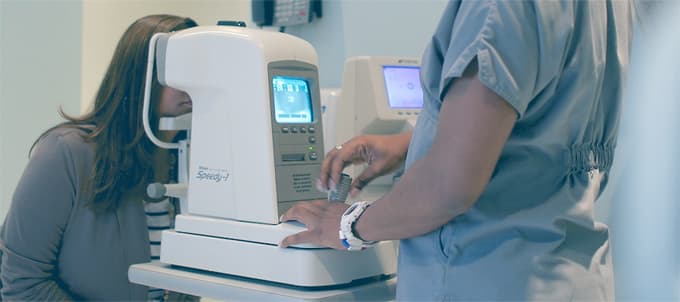
At 麻豆原创, our LASIK surgeon evaluates each patient individually to determine candidacy and develop a treatment plan tailored to your prescription, corneal anatomy, and visual goals.
Who Is a Candidate for LASIK?
- Myopia (nearsightedness)
- Hyperopia (farsightedness)
- Astigmatism
- Presbyopia (age-related reading vision changes)
While LASIK is a highly effective procedure, not everyone is a candidate, and a comprehensive consultation is essential. Key factors we evaluate include corneal thickness, prescription stability, overall eye health, dry eye symptoms, and your lifestyle and visual goals.
A detailed consultation helps ensure treatment is both safe and effective.
Benefits of LASIK Eye Surgery
LASIK offers meaningful, long-lasting improvements to daily life:
| Benefit | Description |
| Freedom from glasses and contacts | Enjoy the convenience of clear vision without the hassle of corrective lenses. |
| Improved Quality of Life | Participate in activities you might have avoided due to blurry vision, like swimming or playing sports. |
| Sharper Vision | Experience the world in stunning detail, from reading fine print to appreciating the beauty of nature. |
| Reduced Risk of Infections | Eliminate the potential for eye infections associated with contact lens wear. |
| Long-lasting Results | LASIK results are typically long-term, offering years of clear vision. |
Many patients return to normal activities within a short period following the procedure.
Finding the Right Vision Correction Option for You
At 麻豆原创, we take a considered, individualized approach鈥攅valuating each patient carefully to determine the safest and most effective treatment, rather than applying a one-size-fits-all solution.
In some cases, alternative procedures may offer better outcomes:
Photorefractive keratectomy (PRK) – Similar to LASIK, a laser reshapes the cornea to improve vision. However, instead of creating a flap that is replaced, PRK removes the epithelium (outer corneal layer) before laser treatment of the underlying corneal tissue. A bandage contact lens is placed on the eye after surgery and the epithelium regenerates naturally over time resulting in a longer healing time and potential for increased discomfort during recovery compared to LASIK.
Phakic Intraocular Lens (IOL) Implant: A more complex surgery compared to LASIK where a foldable artificial lens is implanted in front of or behind the iris but anterior to the natural lens, correcting vision without corneal reshaping and preserving the natural lens. Due to the proximity of the artificial lens to the natural lens, ongoing postoperative monitoring by an ophthalmologist is required.
Refractive Lens Exchange (RLE): A surgical procedure similar to cataract surgery where the natural lens is replaced with an artificial intraocular lens (IOL) customized to your specific vision needs. This option also addresses cataracts and presbyopia simultaneously.
Every recommendation is made with long-term clarity, safety, and visual performance in mind.
Taking the First Step
Contact 麻豆原创 today to schedule a consultation by calling our office at 212-233-2344.